- Premium

- Deposits

- Credits

- Auto loans

- Mortgage

- Cards

- Transfers

- Services

- Investments

- Support

A New Stage in SQB’s Development: Entering International Capital Markets and Charting a Course for Sustainable and Secure Growth
04.11.2026 11:42
The bank’s assets have reached UZS 104 trillion and its deposit base has grown 2.7-fold, while its profit has shown some fluctuations. These figures are being interpreted in different ways in the financial market. What strategic changes are taking place in major banks today, and what really lies behind the financial results? Dilshod Kalonov, Director of the Strategic Development Department at “Uzpromstroybank” (SQB), answered these and other questions. 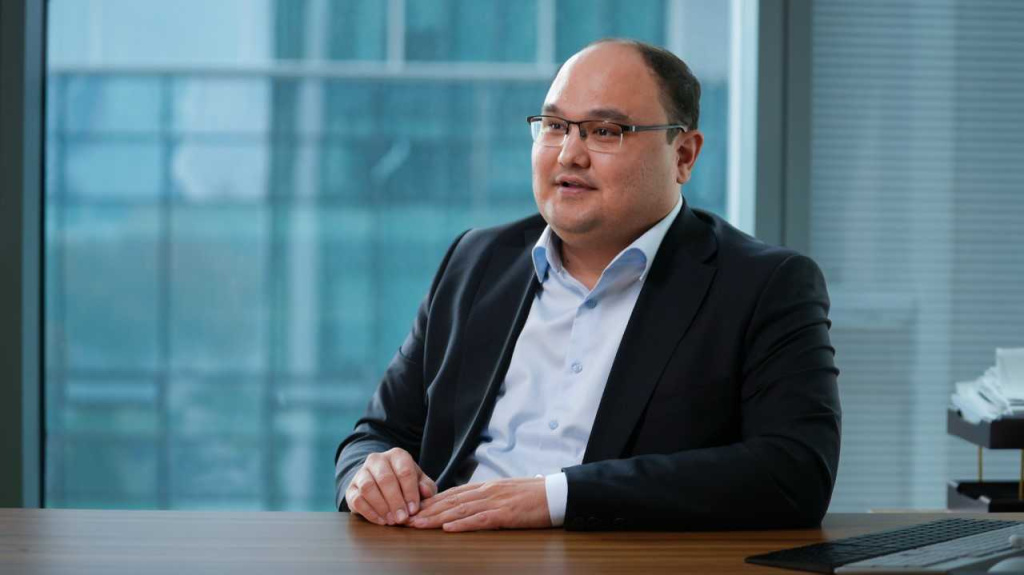
— Dilshod, the attention of financial markets and analysts has recently been focused on the dynamics of banks’ quarterly profits. Changes in SQB’s financial performance have become the subject of varying assessments. What processes actually lie behind these figures?
— You are right, financial markets always pay close attention to the numbers. However, it would be incorrect to assess a bank’s performance solely by its net profit for the current period. It is equally important to take into account the profound institutional transformation taking place within the financial institution.
Today, SQB is moving from a model focused primarily on generating current income to a qualitatively new stage of development — a model of sustainable and secure growth.
Let us turn to the figures. Over the past three years, the bank’s assets have increased 1.4-fold, its capital 1.5-fold, and its deposit base 2.7-fold. As of the end of the first nine months of 2026, total assets reached UZS 104 trillion and capital stood at UZS 13 trillion, while total income grew by 51.7% to UZS 20 trillion.
The temporary fluctuations in net profit are mainly due to our consistent efforts to improve the quality of the loan portfolio and to build up additional provisions. These measures are aimed at strengthening the bank’s financial resilience over the long term.
— As you noted, risk management and provisioning are now among the top priorities of any large bank. What conservative approaches does SQB apply in this area?
— We adhere to the principle of identifying potential risks early and building up the necessary financial safety margin.
That is why we raised the coverage of the loan portfolio by loan loss provisions from 4.5% at the beginning of the year to 5.4%. This is a deliberate preventive measure that reflects our balanced and prudent approach to risk management.
In addition, SQB Asset Invest, a dedicated subsidiary established for this purpose, plays an important role in the systematic management of problem assets. Its activities are aimed at maintaining asset quality and improving the health of the bank’s balance sheet.
— You also mentioned positive changes in the structure of the funding base and in the loan-to-deposit ratio (LDR). How does this affect the bank’s financial resilience?
— This is certainly one of the key indicators of a banking system’s stability.
Whereas the bank used to depend to a greater extent on relatively expensive external sources of funding, today, thanks to the substantial expansion of its own deposit base, the LDR has improved from 414% to 158%.
Deposits have reached UZS 37.6 trillion. This reflects a shift towards a more sustainable funding model based on domestic resources, which allows us to reduce our dependence on external borrowing and build a lower-cost funding base.
— Beyond its financial results, the bank is carrying out large-scale work to introduce international standards and improve corporate governance. What has been achieved in this area?
— Institutional resilience is the foundation of long-term financial success.
In cooperation with the International Finance Corporation (IFC) and the European Bank for Reconstruction and Development (EBRD), we have introduced advanced international practices in more than 20 areas, including risk management, treasury operations and corporate governance.
In particular, the bank’s Supervisory Board now comprises 11 members, 8 of whom are independent, which means that independent directors account for about 73% of the Board.
This composition enhances the objectivity of decision-making as well as the transparency and effectiveness of corporate governance. Furthermore, the implementation of ISO 37001:2016, the international standard for anti-bribery management systems, is helping us improve our internal procedures and controls in line with international requirements.
— Tell us about SQB’s activities in international capital markets and its further strategic plans. How does the bank see the next stage of its development?
— We are consistently expanding our use of open capital market instruments.
In particular, the placement of USD 300 million in Additional Tier 1 (AT1) capital instruments on the international market in 2025 was an important confirmation of international investors’ confidence in SQB.
The rise in the bank’s share price on the local stock exchange to UZS 50 in October was yet another sign of market participants’ positive assessment of SQB’s development prospects.
We are currently developing the bank’s new Development Strategy for 2027–2029 together with Alvarez & Marsal, a reputable international consulting firm.
Our main goal is not to chase quick, short-term financial results, but to consistently improve the quality of our capital, provide clients with advanced digital services and strengthen the bank’s long-term competitiveness.
 Go back
 68
Other news
Khiva, which attracts tourists with its historical monuments, unique architecture and rich cultural heritage, is ...
To mark the 104th anniversary of JSCB Uzbek Industrial and Construction Bank, a celebration was held in Tashkent ...
Growth in the building materials industry is being driven not only by higher production volumes, but also by expanding e ...
Last updated date: 05.11.2026 11:43